
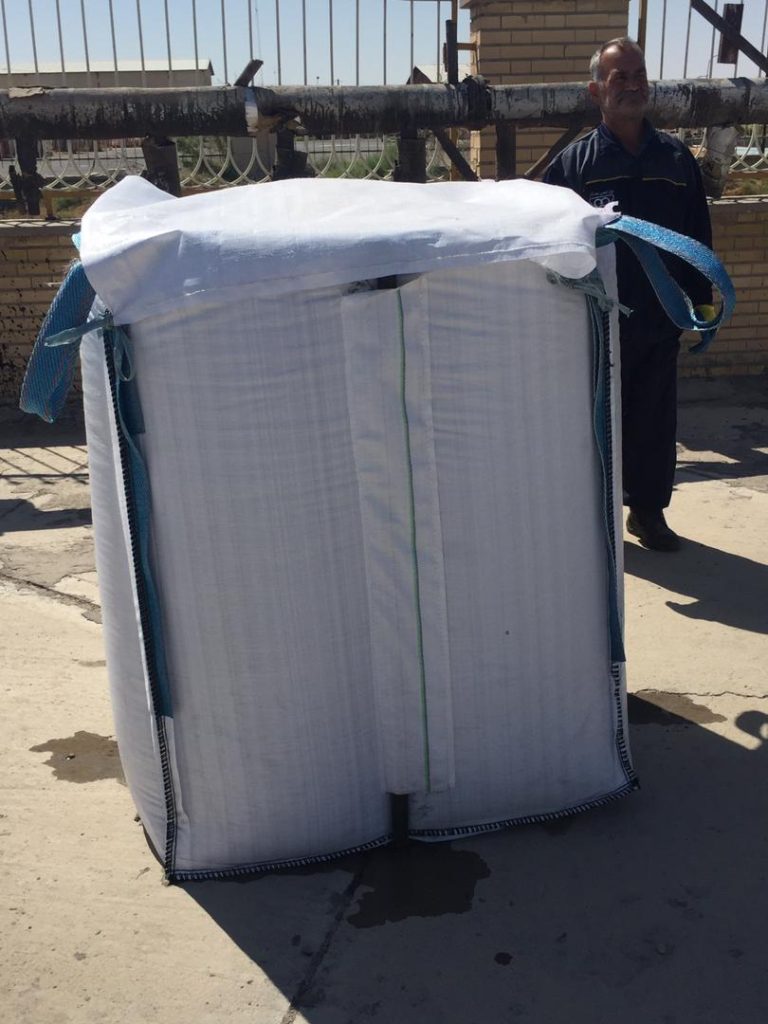
Jumbo Bag Temperature Resistance: The Effects of Heat and Cold on PP Woven Fabric
Polypropylene (PP) woven fabric is the primary material used in jumbo bag manufacturing and is one of the most widely used and cost-effective options for bulk packaging. However, one of the main challenges facing jumbo bags in various industries is exposure to extreme temperatures. Bitumen packaging bags may be exposed to hot bitumen at temperatures of around 120°C, while bags transported through cold regions or during winter may encounter sub-zero temperatures.
This article examines the effect of temperature on polypropylene fabric, the behavior of jumbo bags when exposed to hot bitumen and cold weather, and practical solutions for selecting suitable bags for different temperature conditions.
What Is Polypropylene and What Are Its Thermal Properties?
Polypropylene is a thermoplastic polymer made from propylene monomers. Due to its lightweight structure, chemical resistance, affordability, and recyclability, it is widely used in industrial fabrics, including PP woven fabric for jumbo bags.
Thermal Properties of Polypropylene
Polypropylene typically has a glass transition temperature below 0°C, often reported in the range of approximately -10°C to -20°C, depending on the material grade and measurement method. At low temperatures, its flexibility and impact resistance may decrease, increasing the risk of damage under sudden impact or improper handling.
The melting point of polypropylene is generally around 160–170°C. However, its mechanical properties can deteriorate at considerably lower temperatures, particularly under sustained heat and heavy loads.
Therefore, jumbo bag temperature resistance cannot be determined by the melting point of polypropylene alone. Safe operating conditions depend on the fabric specification, bag construction, load weight, exposure time, lifting design, and any internal liner or protective system.
About Azar Ay Deniz: Jumbo Bag and PP Woven Fabric Manufacturer
Azar Ay Deniz manufactures polypropylene woven fabric and jumbo bags for different industrial applications. The company offers packaging solutions designed to meet customer requirements, including specifications for fabric weight, bag capacity, lifting loops, stitching, and internal liners.
Our product range includes jumbo bags with capacities from 500 kg to 2,000 kg, as well as specialized solutions for industries such as bitumen, petrochemicals, cement, and fertilizers.
For applications involving elevated temperatures, including bitumen packaging, selecting the appropriate bag design and compatible internal liner is essential. Product specifications and quality checks help ensure that the selected packaging meets the intended application requirements.
In the following sections, we explore jumbo bag temperature resistance, focusing on hot bitumen, cold-weather transportation, and practical considerations for choosing suitable packaging.
Effects of High Temperatures on Polypropylene Fabric
High temperatures can affect the strength, durability, and performance of polypropylene woven fabric. The extent of these effects depends on the material grade, exposure duration, and operating conditions.
Reduced Tensile Strength at High Temperatures
As temperature increases, the polymer chains become more mobile, which can reduce the material’s stiffness and mechanical strength. Under sustained heat and heavy loads, this may affect the performance of the fabric and the overall jumbo bag.
The extent of strength reduction varies according to the polypropylene grade, fabric construction, and test conditions. Therefore, specific strength-loss percentages should only be stated when supported by relevant test data.
Softening and Deformation
At elevated temperatures, polypropylene fabric may soften and deform under load. This can affect the bag’s shape and increase stress on critical areas, including seams and lifting-loop attachment points.
For this reason, standard PP woven jumbo bags should not automatically be considered suitable for direct contact with hot materials.
Oxidation and Thermal Aging
Prolonged exposure to elevated temperatures can accelerate polymer oxidation and aging, particularly when the material is exposed to oxygen, sunlight, or other environmental stresses. Over time, this may reduce fabric strength and shorten the useful service life of the bag.
The Role of Internal Liners in Hot Bitumen Packaging
An appropriate internal liner can help separate hot bitumen from the outer polypropylene fabric. However, the liner material must be selected according to the actual filling temperature, contact duration, and chemical compatibility.
A standard polyethylene liner should not automatically be assumed to withstand direct contact with bitumen at 120°C. Its suitability must be verified for the intended application. Specialized bitumen packaging systems may require purpose-designed liners and additional protective features.
Effects of Low Temperatures on Polypropylene Fabric and Jumbo Bag Temperature Resistance
Low temperatures can also create challenges for jumbo bags, particularly during winter transportation, outdoor storage, and export shipments to cold regions.
Increased Brittleness in Cold Conditions
At sufficiently low temperatures, polypropylene may become less flexible and more susceptible to impact damage. The degree of brittleness depends on the polymer grade, additives, fabric structure, and actual temperature.
The glass transition temperature alone does not define the safe operating limit of a finished jumbo bag. The complete bag must be suitable for the expected temperature and handling conditions.
Reduced Impact Resistance in Cold Weather
Cold conditions can affect the impact performance of polypropylene fabric and other bag components. During forklift or crane handling, sudden impacts, dragging, or dropping may increase the risk of damage.
For heavy loads, appropriate handling procedures and compliance with the bag’s rated capacity are essential.
Increased Risk of Damage at Seams and Lifting Loops
Stitching areas and lifting-loop attachment points are critical load-bearing sections of a jumbo bag. Poor construction, excessive loading, sudden impacts, or unsuitable material selection can increase the risk of failure, especially under challenging environmental conditions.
Reinforced construction, suitable stitching, and appropriate testing can help improve performance when bags are intended for cold-weather applications.
How to Improve Jumbo Bag Performance at High and Low Temperatures
Selecting the right jumbo bag requires considering the intended filling material, operating temperature, load capacity, transportation method, and storage environment.
Solutions for Hot Bitumen Applications
1. Select a Suitable Internal Liner
Choose a liner specifically tested for the intended filling temperature and contact conditions. Do not rely on thickness alone to determine heat resistance.
2. Specify the Appropriate Fabric
Fabric weight, weave density, yarn properties, and bag design all influence mechanical performance. Heavier fabric may improve certain properties, but fabric weight alone does not guarantee heat resistance.
3. Use Suitable Sewing Materials and Construction
Thread, seams, lifting loops, and attachment points must be compatible with the expected operating conditions. The complete bag design should be evaluated for the intended application.
4. Consider a Purpose-Designed Metal Box
A suitable metal box can provide additional mechanical protection and support during handling and transportation. Depending on its design, it may also influence heat transfer, but it should not automatically be considered thermal insulation.
5. Verify the Complete Packaging System
For hot bitumen, the liner, outer fabric, seams, lifting loops, and any metal support system should be assessed together. The complete packaging solution must be suitable for the actual filling temperature and handling process.
Solutions for Cold-Weather Applications
1. Choose Materials Suitable for Low Temperatures
Where necessary, select polypropylene grades and additives designed to improve low-temperature toughness. Suitability should be verified through relevant material or finished-bag testing.
2. Reinforce Critical Areas
Appropriate stitching, lifting-loop attachment design, and fabric specifications help reduce the risk of damage during handling.
3. Handle Bags Carefully
Avoid sudden impacts, dragging, and rough handling, especially when bags have been exposed to very low temperatures.
4. Store Bags Under Suitable Conditions
Whenever possible, store empty jumbo bags in a dry, sheltered environment and follow the manufacturer’s recommendations for temperature and storage conditions.
Choosing the Right Jumbo Bag for Temperature Conditions
Jumbo bag temperature resistance depends on more than the melting point of polypropylene. Fabric properties, liner compatibility, stitching, lifting-loop design, load capacity, exposure duration, and handling conditions all influence the performance of the finished bag.
For hot bitumen applications, a purpose-designed packaging system with a verified heat-compatible liner is essential. For cold-weather transportation, suitable materials, appropriate construction, and careful handling help reduce the risk of damage.
Azar Ay Deniz supplies jumbo bags and PP woven fabric for different industrial applications. Contact our team to discuss your product specifications and packaging requirements for hot bitumen, cold-weather transportation, and other bulk materials.
How useful was this post?
Click on a star to rate it!
Average rating 0 / 5. Vote count: 0
No votes so far! Be the first to rate this post.
We are sorry that this post was not useful for you!
Let us improve this post!
Tell us how we can improve this post?
